Executive summary
In 2026, a growing number of enterprises are moving from cloud-first AI to “edge-first” architectures where inference — and increasingly parts of learning — happens on devices at the network edge. Two technical trends are converging to enable this shift: compact or "tiny" foundation models optimized for constrained hardware, and federated distillation techniques that update those models without exchanging raw data. This analysis breaks down the practical trade-offs — performance, privacy, operational burden and cost — and offers a decision framework for CIOs, ML engineers and product leads evaluating edge-first AI.
Why edge-first now?
Three forces make edge-first AI attractive to enterprises in 2026:
- Latency and reliability: Use-cases such as point-of-sale fraud detection, industrial control loops and telemedicine require sub-100ms inference and resilience to intermittent connectivity.
- Privacy and compliance: Regulations (e.g., GDPR post-Brexit regimes, HIPAA in health verticals, and regional data residency laws) and customer expectations push raw-data-minimizing architectures.
- Hardware maturation: NPUs in consumer and industrial chips (Qualcomm, NVIDIA Jetson family, Arm-based NPUs, Apple Neural Engine variants, and dedicated edge accelerators) now routinely support 8-bit and 4-bit model runtimes and small transformer inference on-device.
What are tiny models and federated distillation?
Tiny models are compact neural networks or distilled variants of larger foundation models engineered to fit memory, compute and power constraints on edge devices. Techniques include aggressive distillation, structured pruning, and quantization to 8-bit or lower. Toolchains such as quantized runtimes and libraries (e.g., ONNX runtimes, llama.cpp and other optimized inference backends) make deployment feasible on commodity hardware.
Federated distillation is a paradigm where edge clients train or refine local small “student” models using supervision derived from either local labels or soft predictions (logits) produced by one or more teacher models. Crucially, instead of exchanging raw gradients or private data, clients share distilled outputs or aggregated pseudo-labels with a central server or with each other, reducing privacy leakage and bandwidth.
Practical trade-offs
The decision to adopt tiny models and federated distillation hinges on measurable trade-offs across five dimensions.
1. Accuracy vs model size
- Tiny models typically lose some predictive fidelity relative to large cloud-hosted models. Recent enterprise deployments report 2–8 percentage-point drops in top-line metrics (accuracy, F1) for highly compressed models; the loss is use-case dependent (visual vs. tabular vs. multimodal).
- Distillation recovers much of the gap by transferring teacher knowledge, and continued on-device fine-tuning via federated distillation narrows the delta further over time.
2. Latency and user experience
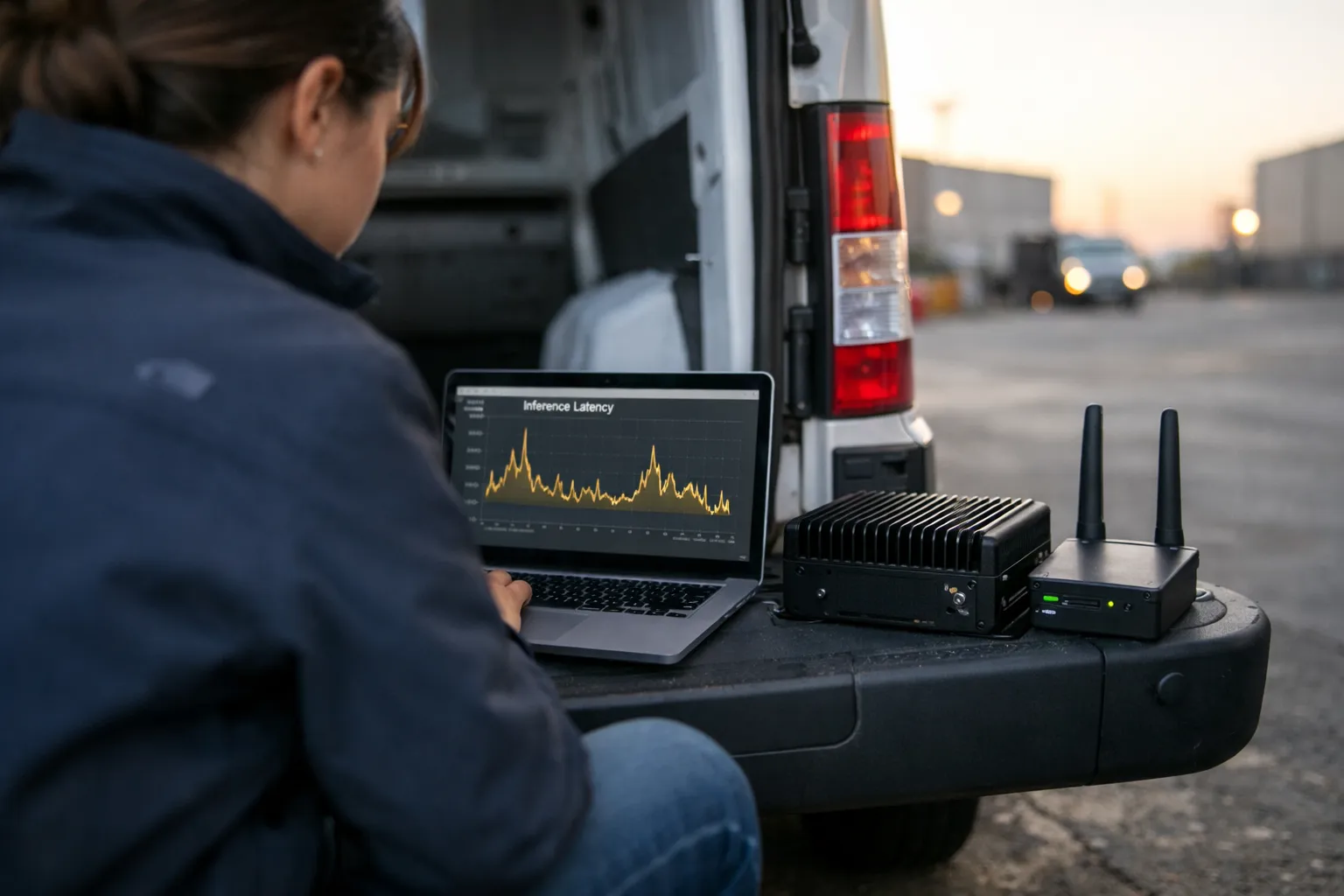
On-device inference removes network round-trips. In practice, inference latencies that were previously 150–400ms for cloud calls often fall below 20–80ms on-device for tiny models, improving user experience in interactive and control scenarios.
3. Bandwidth and cost
Federated distillation generally exchanges compact distilled artifacts (soft labels, summary statistics, or compressed model updates) instead of large datasets. Compared with periodic full-model pulls or raw-data uploads, bandwidth can be cut by 60–95% depending on frequency and compression. This materially reduces operational network cost in scale deployments (tens of thousands of devices).
4. Privacy and regulatory risk
By keeping raw data local and exchanging only distilled signals, federated distillation reduces some avenues of data leakage. However, privacy is not absolute — aggregation, differential-privacy techniques and careful protocol design are still necessary to meet regulatory standards such as HIPAA or strict corporate policies.
5. Operational complexity
Edge-first pipelines require new MLOps capabilities: secure model signing, incremental delta updates, device health telemetry, rollback mechanisms, and distributed testing strategies. The ops cost often outweighs model cost reductions for smaller fleets; it becomes worthwhile at scale or when latency/privacy are mission-critical.
When federated distillation makes sense
Use federated distillation when:
- Devices collect sensitive, non-sharable data (medical images, customer PII).
- Low-latency decisioning is essential and network flakiness is common (retail POS, manufacturing control).
- There is a large fleet where centralized labeling is impractical and continuous local adaptation improves outcomes (predictive maintenance, localized NLP dialect handling).
Operational blueprint: how to implement
Adopting edge-first tiny models with federated distillation is best done iteratively. A practical blueprint:
- Baseline and measure: Benchmark current cloud-inference latency, throughput and cost per request. Identify SLOs and privacy constraints.
- Prototype a tiny student: Distill a small model from your best teacher model and profile it on representative edge hardware (RAM, NPU, thermal envelope).
- Define distilled artifact formats: Decide whether clients will share logits, compressed pseudo-labels, or distilled data summaries, and what privacy protections (e.g., DP noise) to apply.
- Edge orchestration: Deploy runtime agents for secure model updates, telemetry, and fail-safe rollback (code signing and attestation recommended).
- Monitoring and validation: Instrument drift detection, per-device metrics, and a shadow-testing pipeline to compare local predictions with a central reference model.
- Governance: Keep an auditable trail: versions, update timestamps, and per-update A/B results for compliance audits.
Vendor landscape and tooling (practical examples)
Enterprises should mix commercial and open-source components:
- Hardware: NVIDIA Jetson and Orin modules remain dominant for high-performance edge inference in 2026; Qualcomm’s Snapdragon platforms and Arm NPU-equipped boards power many mobile and embedded deployments.
- Edge runtimes: ONNX Runtime, TensorRT, and optimized runtimes like llama.cpp or GGML-backed engines support quantized transformer inference at small sizes.
- Federated tooling: Open-source frameworks and commercial offerings (platforms offering federated learning and privacy tooling) simplify orchestrating distillation at scale; look for support for compressed communication, secure aggregation and DP.
- Cloud-edge orchestration: Hybrid solutions (AWS IoT Greengrass, Azure IoT Edge, Google Cloud IoT with edge TPU integration) help manage device fleets and model rollouts.
Cost model considerations
Key levers that determine TCO:
- Per-device hardware amortization: One-time cost of an edge module vs. cloud instance costs for equivalent throughput.
- Network: Volume and frequency of model and distilled-artifact transfers.
- Ops staff and tooling: SRE/ML engineering investment in device management, monitoring and security.
Enterprises with thousands of devices usually reach payback on hardware investment because per-request cloud costs compound. For smaller fleets, hybrid approaches (on-device inference for critical path, cloud for heavy processing) are often better.
Risks and open problems
- Model drift and fragmented behavior: Highly localized models may diverge, complicating governance and consistent UX across customers.
- Privacy leakage from aggregated artifacts: Soft labels and distilled outputs can leak information unless properly aggregated and protected.
- Debugging and observability: Root-causing failures across heterogeneous devices remains difficult.
Decision checklist for business leaders
Before committing to an edge-first, federated-distillation architecture, validate the following:
- Do you have latency or offline requirements that cloud-only cannot meet?
- Is raw data legally or commercially prohibited from leaving devices?
- Can your ops teams run firmware-signing, secure rollout, and remote rollback at scale?
- Have you budgeted for per-device lifecycle costs (security patches, model updates, telemetry)?
- Can you quantify acceptable accuracy degradation and plan for continual retraining or teacher refresh?
Conclusion
Edge-first AI built with tiny models and federated distillation is no longer experimental: in 2026, it is a practical architecture for enterprises that prioritize latency, privacy and offline reliability. The pattern trades model accuracy for responsiveness and reduced data-exposure risk, but well-designed distillation, monitoring and governance can close that gap. For organizations with strict SLAs, regulated data, or large geographically distributed fleets, the combination offers a compelling balance of performance and risk control. For others, a hybrid approach that keeps heavyweight reasoning in the cloud while running critical inference at the edge is often the prudent first step.