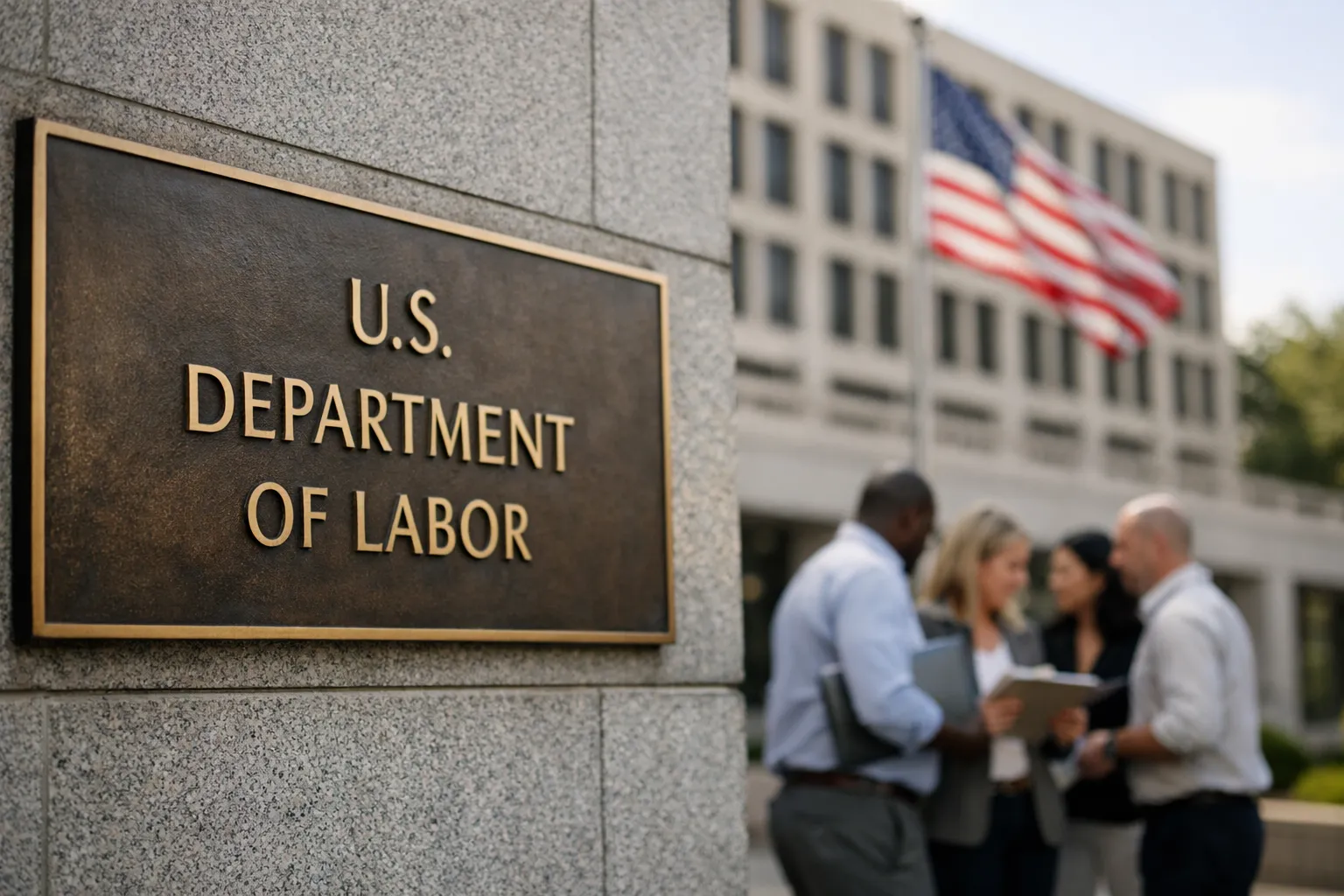
The US Department of Labor (DoL) on Oct. 24, 2026 finalized a rule that requires employers using automated hiring and screening tools to conduct and retain algorithmic impact assessments (AIAs), implement ongoing bias monitoring and provide transparency to applicants. The measure targets tools that materially affect hiring decisions and applies to private employers with 100 or more employees and federal contractors, signaling a major compliance shift for HR tech procurement and operations.
What the rule requires
The DoL's final rule, which follows a 90-day implementation window, lays out several concrete obligations for covered employers and vendors of AI-powered hiring systems:
- Pre-deployment algorithmic impact assessments (AIAs): Employers must document intended use, data sources, performance metrics and anticipated disparate impacts across protected classes before deploying an automated hiring tool.
- Ongoing monitoring and periodic audits: Employers must run regular audits—at least annually—and ad hoc tests when models are retrained or when substantive changes to the tool occur, to detect disparate impact and accuracy drift.
- Explainability and applicant notice: Applicants must receive clear notice when automated systems are used and have access to a concise explanation of how the tool influences decisions and the ability to request human review.
- Data retention and logging: Interaction logs, model versions, training-data provenance metadata and audit artifacts must be retained for a minimum of three years to support inspections and compliance reviews.
- Remediation requirements: When audits detect unlawful disparate impacts or systemic errors, employers must document remediation plans, pause affected tool features if necessary and notify impacted applicants in specific cases.
- Vendor accountability: The rule requires that contracts with vendors include warranties and access provisions enabling employers to perform required audits and obtain training-data documentation.
Scope, timeline and enforcement
The rule applies to private employers with 100 or more employees and to entities contracting with federal agencies. The DoL set an effective date of May 24, 2027, giving companies roughly seven months to adapt procurement, IT and legal practices. Compliance inspections will be led by DoL’s Wage and Hour Division in coordination with the Office of Federal Contract Compliance Programs for contractors.
Enforcement tools include administrative investigations, corrective action orders and civil penalties for noncompliance. The final rule emphasizes corrective remedies—remediation plans and temporary suspension of automated features—rather than immediate punitive measures, but it authorizes monetary penalties for willful or repeated violations.
Why this matters to businesses
The DoL’s rule reframes automated hiring tools from a primarily HR and product concern into a compliance-driven operational workflow. For mid-market and enterprise buyers, the practical implications are immediate:
- Procurement: Contracts must now include audit access, model and data provenance clauses, and service-level commitments for remediation support.
- Ops and engineering: Employers will need logging infrastructure, model-version control, and reproducible test suites to run mandated audits and retain required artifacts.
- Legal and HR: Policies around applicant notice, consent and human review will require updates, and HR teams must integrate audit findings into selection processes.
- Vendor selection: Buyers will prioritize vendors that offer compliance-ready features—transparent model cards, built-in fairness tests, and secure data export for independent audits.
Industry reaction and vendor preparedness
HR tech vendors and enterprise buyers face a fast-moving transition. Several major talent-platform vendors announced in recent weeks that they will add compliance tooling—automated AIA templates, built-in fairness dashboards and standardized audit exports—to meet the DoL's requirements. Observers say the rule effectively raises the bar for market entry among smaller vendors that lack mature engineering and logging capabilities.
Industry trade groups representing HR technology and staffing firms urged the DoL to provide detailed technical guidance and a phased approach for small vendors. Compliance consultancies and legal advisers are preparing standardized playbooks to help employers run AIAs, formalize vendor clauses and stand up monitoring pipelines.
Practical steps for affected employers
Companies using or planning to deploy AI hiring tools should prioritize five actions to reduce compliance risk:
- Inventory AI systems: Identify all candidate-facing and screening tools and map owners, data flows and decision impact.
- Run pre-deployment AIAs: Document model purpose, input datasets, fairness metrics, validation protocols and fallback procedures.
- Update contracts: Require vendor cooperation for audits, access to training-data metadata, and contractual remedies if the vendor is the source of noncompliance.
- Build monitoring pipelines: Implement model-versioning, logging, routine fairness and performance tests, and an incident response playbook to pause or roll back features.
- Train HR staff: Ensure recruiters and hiring managers understand notices to applicants, the human-review process and how to interpret audit reports.
What to watch next
Within weeks, the DoL is expected to release technical guidance and sample AIA templates that will clarify measurement thresholds, acceptable fairness metrics and reporting formats. Companies should watch for coordination across federal agencies—particularly the Equal Employment Opportunity Commission and the Office of Management and Budget—that could align enforcement standards and broaden or narrow practical obligations.
For enterprises, the rule signals a broader regulatory trend: operationalizing algorithmic accountability through auditable workflows rather than ad hoc assessments. Firms that invest now in auditability, data provenance and robust vendor contracts can convert compliance work into a competitive advantage: faster procurement, lower litigation risk and better hiring outcomes.